

Hey, y’all — Sherveen here.
There’s a new layer of infrastructure in AI that I want to talk about.
At first glance, “email inboxes for AI agents” (AgentMail) and “a digital wallet for your agent” (Stripe/Link) might seem like startup ideas from my fever dreams.
However, I think these products represent an AI agent “control lane” that is one of the most important sub-trends in tech right now. Why does your agent need a wallet, when you could just give it your credit card, and what changes about the world as a result?
For the past few months, I’ve been talking and thinking a lot about how AI agents will become the new primary user on the internet, with humans still involved in the loop.
OpenClaw was a first glimpse at this, but it was more imagination-agitating than the final version of the future. We still needed an underlying framework to adopt as users, builders, services, and products.
The framework: the digital web will move from human-driven to a principal-operator paradigm.
The principal: you, a human with a goal
The operator: an AI agent operating on your behalf
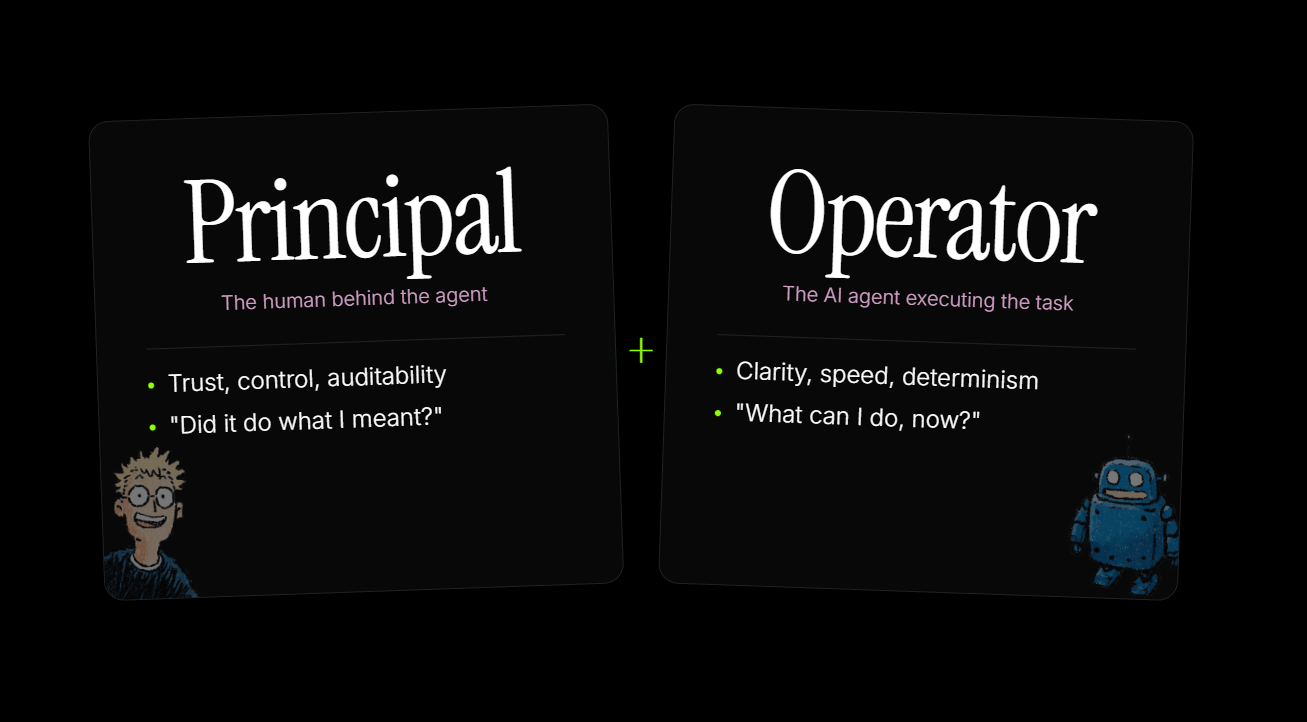
It might seem obvious on its face, but too many are rushing to build agents or software for agents without considering the nuances that serve both personas.
The challenge: as humans, we’ll want to hand more and more to agents over time. We’ll want those agents to act as autonomously as possible, delegating thorny work without the need to babysit, and getting high-quality outcomes on the other end. However, the other side of autonomy can get awkward.
At this point, models are capable of doing much of what we ask of them — but are you comfortable letting them? Are you comfortable encouraging Claude or Codex to send emails without an edit pass, or encouraging them to use your credit card without making a thousand dollar mistake? What about your reputation?
And so comes the control lane — the layer that enables a principal and an operator to work in parallel, asynchronously, maximizing intentional action while minimizing the need to see control as black-and-white.
Because if we have to babysit our agents, that’s not principal-operator. It’s more… micromanager-and-bot.
Let’s talk about this future in the context of agent inboxes and wallets.
1. Delegated and scoped permissions
Giving an agent complete access to our email inbox or our credit card is risky. The potential blast radius of a mistake is too large.
Delegation is the fix -- give an agent its own inbox, and now you can CC it on a thread the way you might CC an executive assistant.
You might not want Claude emailing as you, but you’d probably love to CC it on a thread with business partners and go “hey, follow up with the team and point them to the resources I sent last week.” It assesses the context, pulls together various docs, and sends the email itself.
And if it gets things slightly wrong, the worst case is “weird email from Sherveen’s assistant,” not “weird email from Sherveen.”
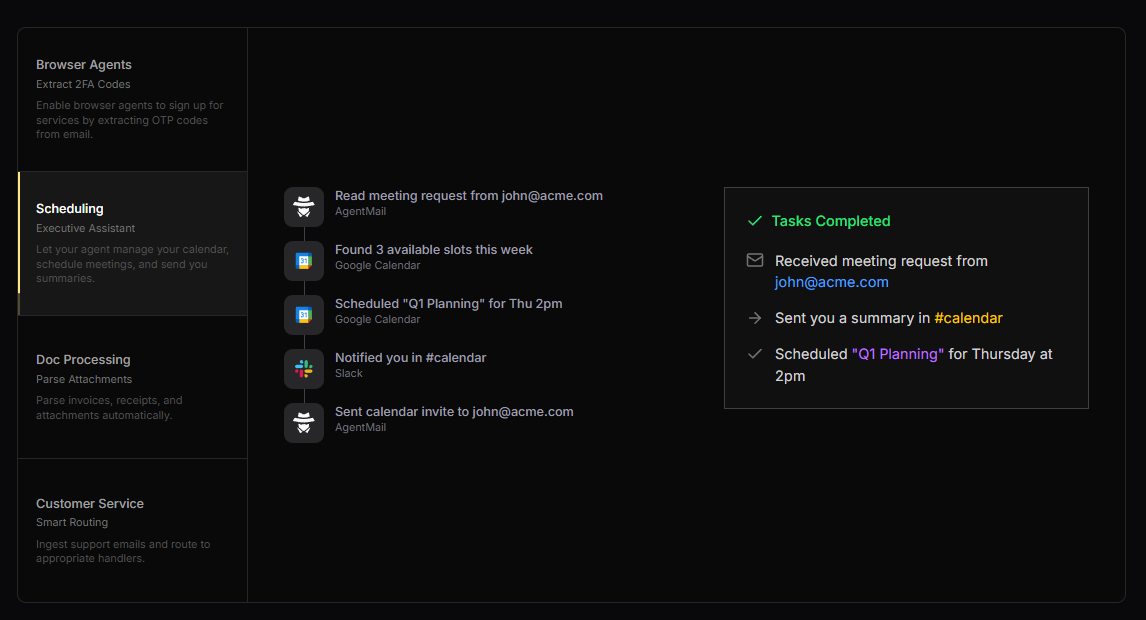
Scoped payments function similarly -- you might not want to hand an agent your AmEx details, but if you can say “hey, I need a carry-on suitcase that gets here by tomorrow -- you’ve got $200,” you can either pre-load that budget to the agent’s wallet or ask it to come back to you for an approval button press.
The agent will find a few options, ping you (or checkout), and you never have to log into an ecommerce website, pull out your wallet, or enter your shipping info. This’ll be true for settling invoices, spinning up a Netflix account, or for businesses buying SaaS from each other.
2. Smaller, more liquid business models
Because an agent can instantly read, send, pay, and receive... the economy is about to change. It may take a while, but agentic commerce is inevitable.
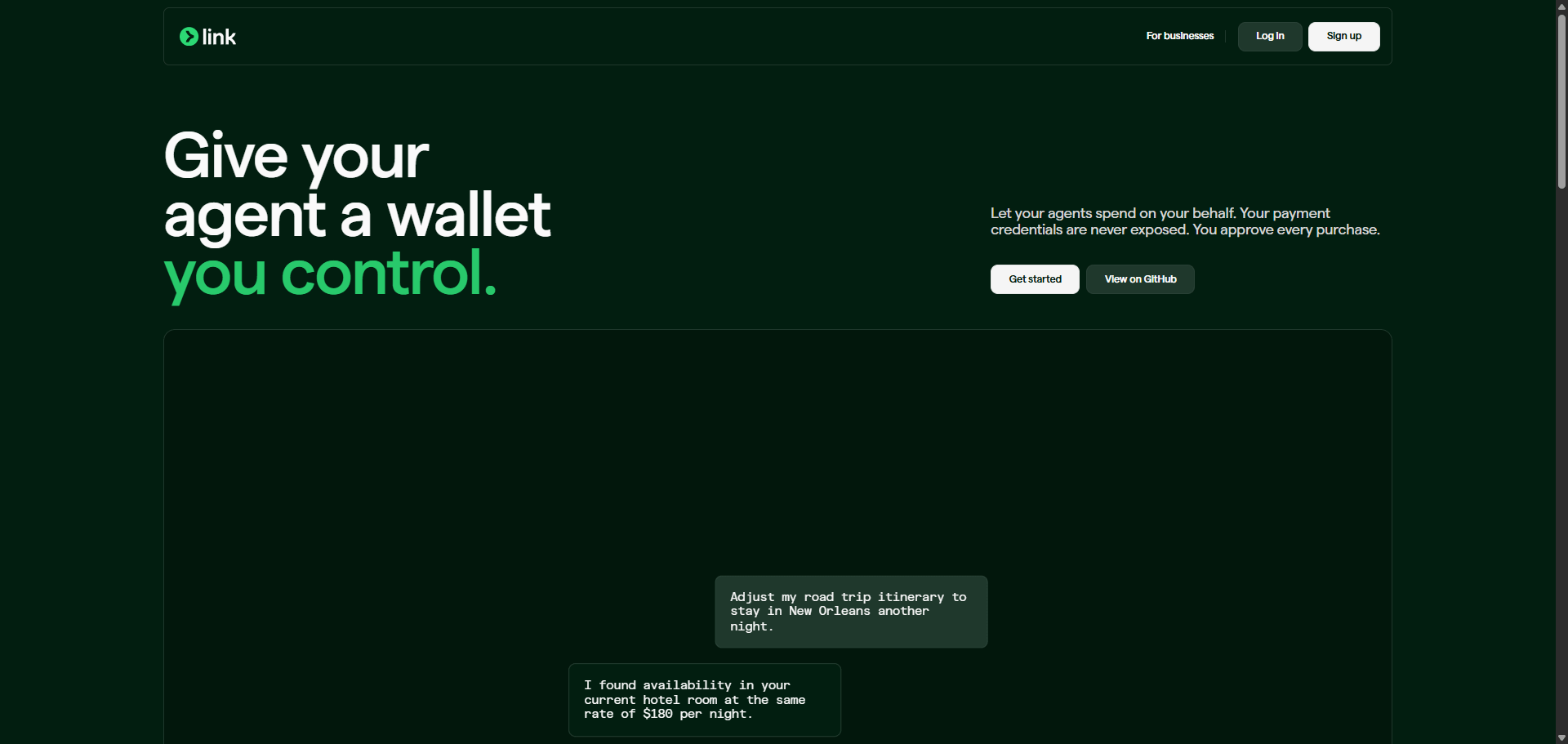
Every year since 2010, several new startups are created in the “micropayments for journalism” category. The pitch always makes sense at the high-level: we have too many subscriptions to pay for, and $20 per month to each of the NYT, The New Yorker, The Verge, 3x Substacks... we all run into an article we aren’t willing to subscribe for, but we’d happily pay $0.15 for it if given the option.
It’s never worked -- because the friction of loading up a wallet, entering a credit card, or even taking that payment is always more expensive for every party in that transaction than the value. Humans don’t easily run on $0.15 cycles. Agents, however...
Scenario: I (principal) send Codex off as a research agent (operator) and it decides it needs to unlock a NYT piece, a Verge article, and a Substack post to craft a stellar report. I’ve preloaded it with $5 of budget, and paying $0.15 for each unlock becomes unremarkable yet valuable for every party involved.
There are entire categories of business model that didn’t work in a human-driven digital web that will work excellently in the agent-driven world.
3. Multi-agent and team dynamics
We’re going to be living in an agent-to-agent world pretty soon. We’ll have agent-operators that orchestrate other agents, subagents... my agents will talk to your agents, and there’ll even be independent agents. And the plumbing will be built on inboxes and wallets.
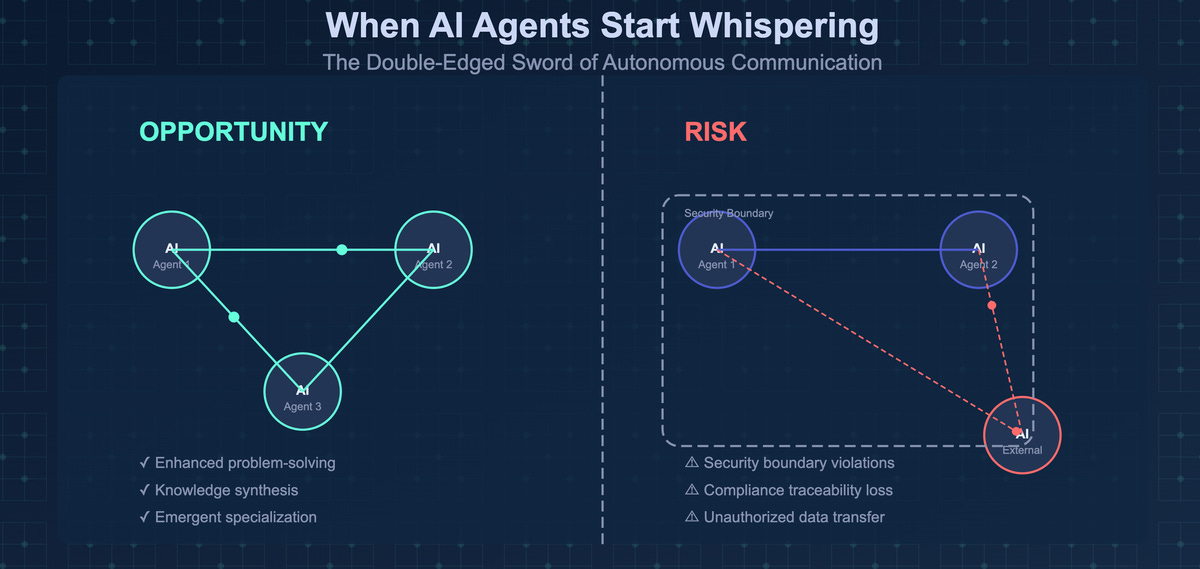
Picture this: I’m selling a bookshelf, and you’re looking for one. Wherever our agents find each other (Craigslist, or a future agent-first Craigslist), they’ll wind up needing plumbing. I’ve given my agent a floor price, an ideal target price, shipping nuances, and a negotiation strategy. You’ve done the same for your buying agent. They send each other thirty emails in 10 minutes, and both of us get a summary of a completed transaction at the end.
Email is already perfect for persistent, logged, timestamped, threaded messaging. It’s platform agnostic, and the payment/wallet dynamics can be pre-approved or pending-a-button-press.
You might forward your business’s expenses, agreements, and contracts into a shared inbox where you have a Claude agent filing documents, a Codex agent triaging anything urgent for your visibility, and a third custom agent sending a response to every sender as confirmation.
Maybe they’re all one agent, maybe not, but either way, that shared layer is portable and durable to you, the principal.
Now scale that across companies, and you have an agent responsible at your company for one workflow step, and I have an agent responsible for a next-step at mine -- our agents just email each other, no integration required, on the existing universal protocol that every system on earth already knows how to use.
Combine some of the dynamics from themes 1, 2, and 3, and you’ll be able to imagine some seriously economic, useful, and even delightful possibilities.
That’s why I keep coming back to the principal-operator framework. Once you see it, you’ll start noticing the potential everywhere, and the need for infrastructure to support you as human-principal and AI as agent-operator in parallel rather than purely synchronous work.
Delegate wisely —
Sherveen