

Hey, y’all -- Sherveen here.
As expected, OpenAI announced dots, their flavor of the always-on AI assistants that are all the rage these days.
They also announced a whole lot else, but before we get to that… they (somehow) weren’t the only ones to launch personal AI assistants over the past 24 hours.
So, let’s take a tour through the announcements, and we’ll end with some meta takeaways re: dots, AI assistants, and the other OpenAI DevDay releases.
An agent with humans in the loop
The most interesting AI assistant launch came Wajo, founded by a former Google DeepMind engineering lead. They announced Fo, an action-oriented agent with a focus on task completion without mistakes and stuck moments.
Their shtick is quite compelling: when an agent gets stuck or can’t proceed alone, Fo escalates to a human to get the job done.
Imagine you ask your agent to call 5 plumbers, get pricing, and come to you with options -- but 2 of those plumbers realize they’re talking to AI and hang up. Fo will employ an on-demand human to make those 2 calls, and then your agent will come back with the complete set of information.
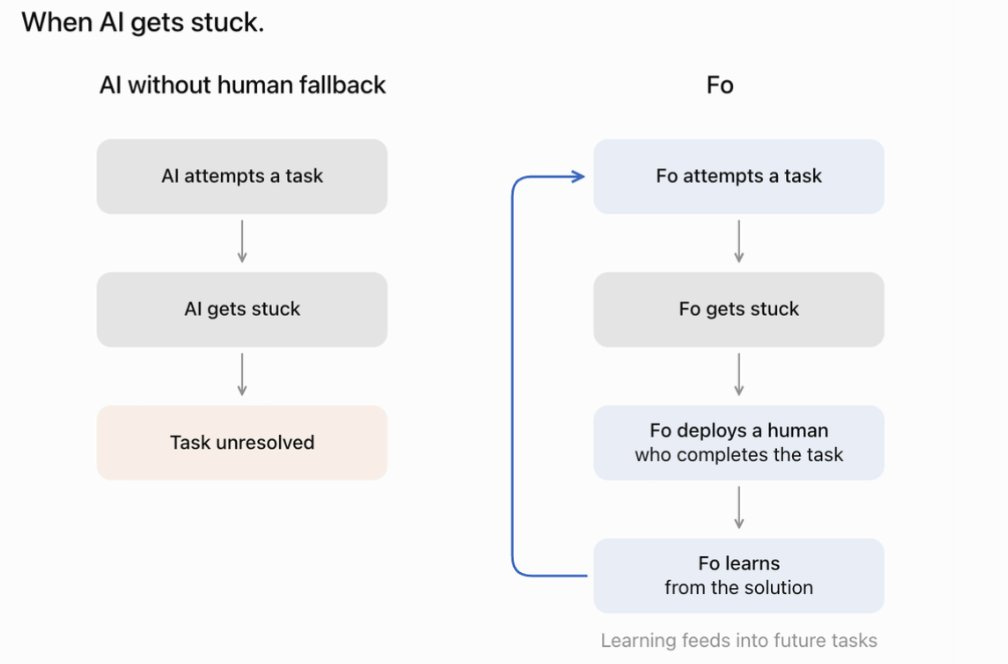
AI assistants are going to run into a lot of edge cases over the next few years, in addition to facing straight-up uncooperative systems and people. Why not put a human-in-the-loop, as long as it’s economical to the task?
Some of you may remember RentAHuman, a startup providing humans as a workforce for this very purpose. As they put it: “the future of work still needs people.”
It can feel a bit dystopian, but if we do want these AI assistants to be task-crunching machines on our behalf… Fo is the first attempting to meet that promise fully, rather than just ‘to the most reasonable extent.’ I’m intrigued.
Manus relaunches itself
You might remember Manus as the Chinese AI startup acquired by Meta for $2 billion in December of last year. It was a big acquisition at the time, but even more notable was the fact it fell through. By August, Chinese regulators told the two companies to withdraw their arrangement on national security + strategic technology grounds.
To people early on the trend of AI agents, Meta’s desire to acquire Manus wasn’t a surprise. If you were around to hear me yapping in mid-2025, it was the company and product I’d cite as “a real AI agent” at a time when agents weren’t yet widespread.
Before pretty much anyone else, Manus had built an application that allowed models to use their own virtual browser + computer, run multiple tasks in parallel (+ swarms), and use scratchpad files + to-do lists to plan and execute long-running tasks.
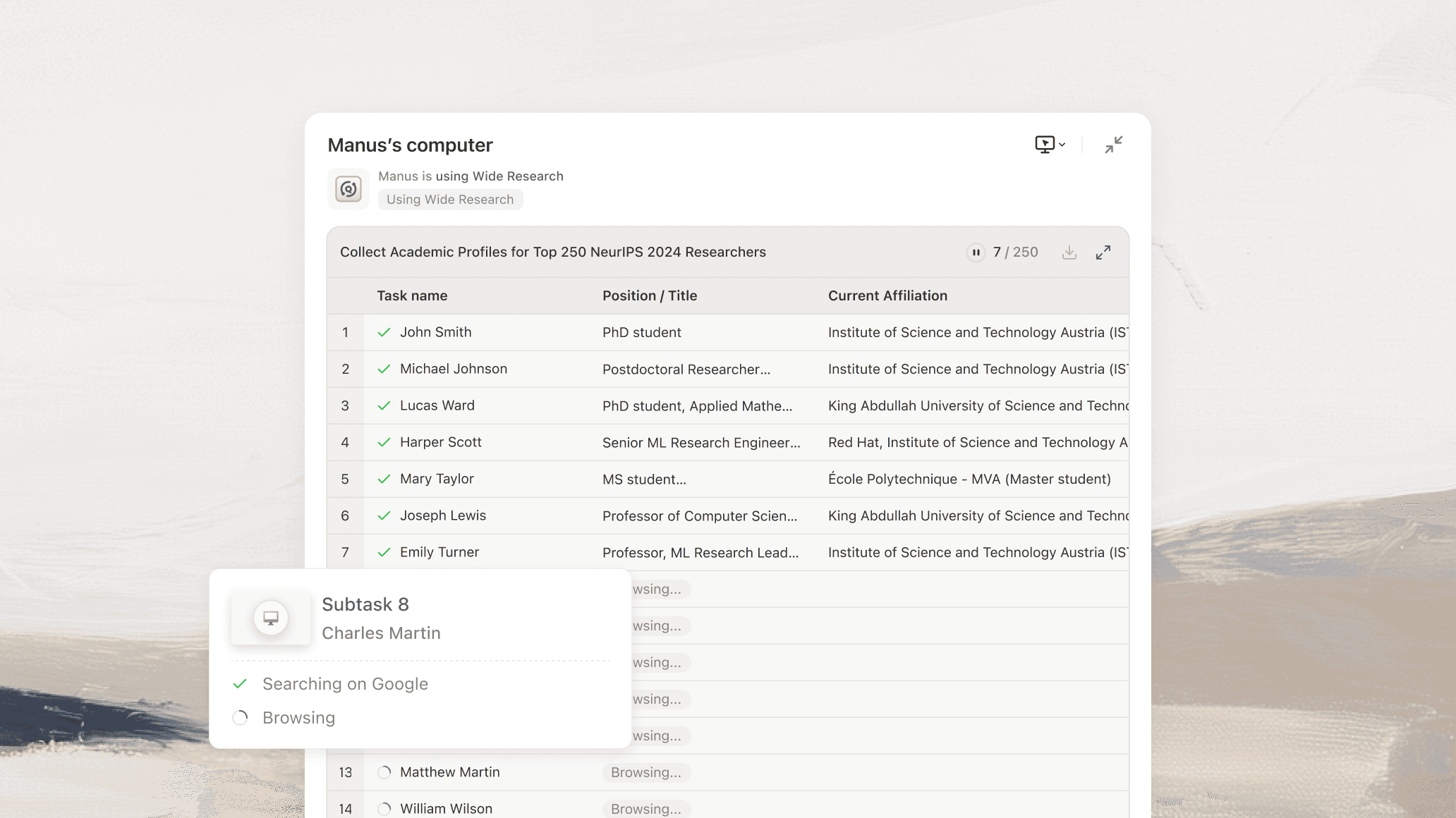
So, it was unfortunate that they spent so much time beginning to integrate with Meta only to have to spend a lot of time un-integrating, too.
Now, they’re back with Manus 2.0, with the headline being their version of personal agents: Cue. Like many of the others, Cue agents have their own computer, email inbox, phone number, and wallet, letting you text them and delegate activity for your work and personal life.
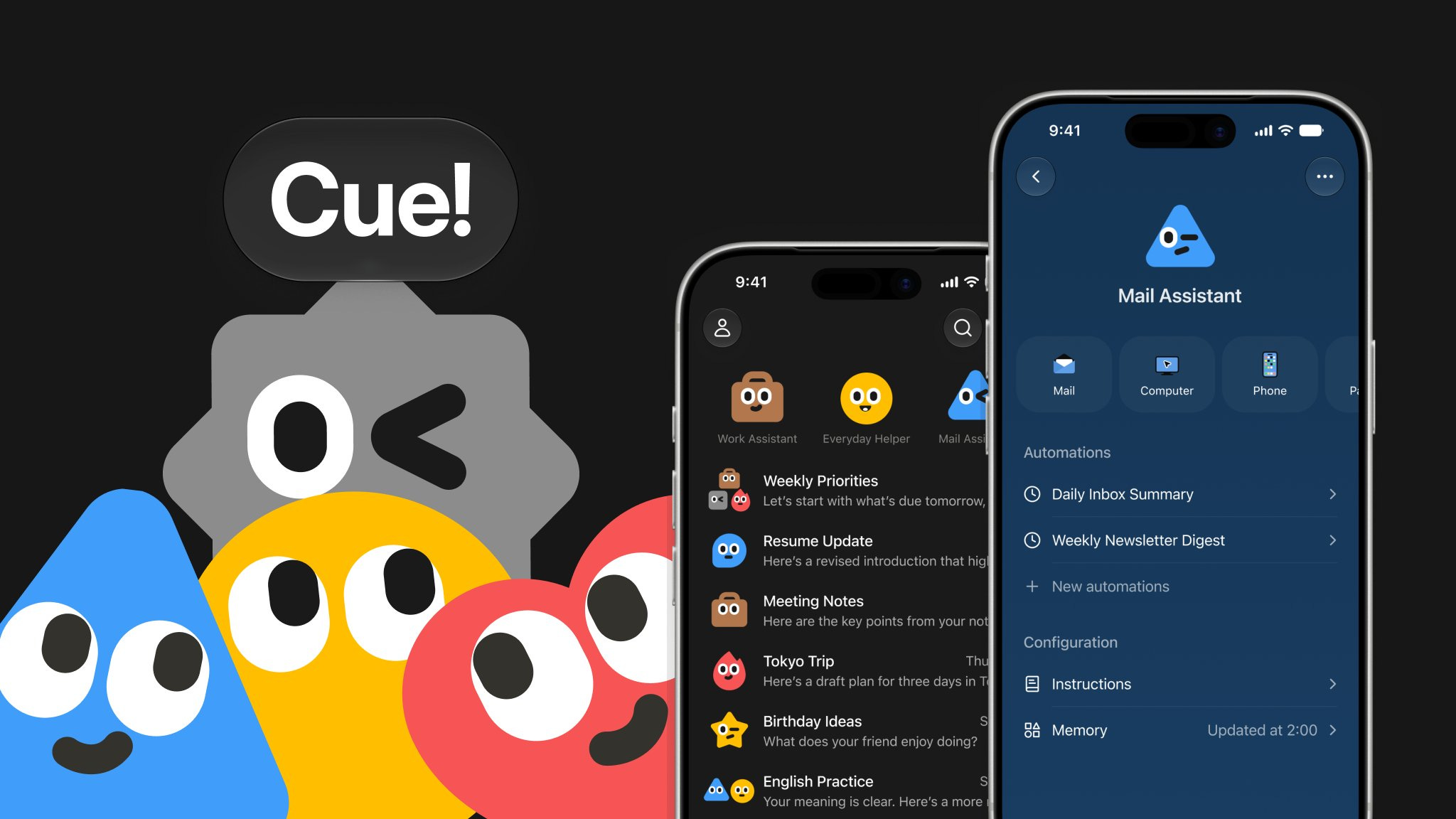
It’s very reminiscent of Meta’s Muse product, and it makes you wonder how much of Manus’s DNA was already ingested by Meta before they were told to unwind the acquisition. Rooting for this team -- they were in on the trend before it was cool.
Before we get to OpenAI: yesterday, I mentioned that AI assistant companies would be concerned with figuring out cross-task context and multiplayer (related, teams).
Right on cue:
1: SpaceXAI announces Team Bots for Grok Bot.
Team Bots encompass particular roles, workflows, or departments, gaining corresponding access to context, plugins, systems, credentials, memories, etc.
Everyone on the team can talk to and work with the bot, but their individual conversations are private unless they happen in a shared Slack channel.
So, your customer success team can have a shared Success Bot with access to your CRM, and all CSMs can use + update the bot as a unified resource.
2: Meta announces Muse for Small Business.
Now, a Muse agent can connect to apps like Asana, Box, Canva, QuickBooks, Notion, Slack, Stripe, and Zoom.
This is the fastest Meta/Facebook has ever attempted to turn a product into a business-friendly experience. They know that to be useful to you, they need to have context and capability beyond just personal productivity.
OpenAI’s DevDay 2026
Let’s recap the announcements and what they mean:
dots
OpenAI’s answer to the AI assistant craze isn’t surprising in any big way. It’s an always-on agent meant to help delegate tasks from a central chat, it has its own virtual computer or can use yours, and it adapts to your conversations and context over time.
The advantage comes in two flavors, really. The first: OpenAI’s is powered by GPT-6 Astra. That’s a better model than anything in the Grok suite and better than Muse Spark 1.3.
And OpenAI is giving everyone unlimited usage for their first dot (but you have to be a Pro or Business Premium member to use it at all, $100+/month).
The second advantage is that this assistant, unlike the others, has access to your preexisting ChatGPT and Codex conversations. My dot immediately put together a scratchpad of projects I’m working on across different machines while I was still trying to give it a name.
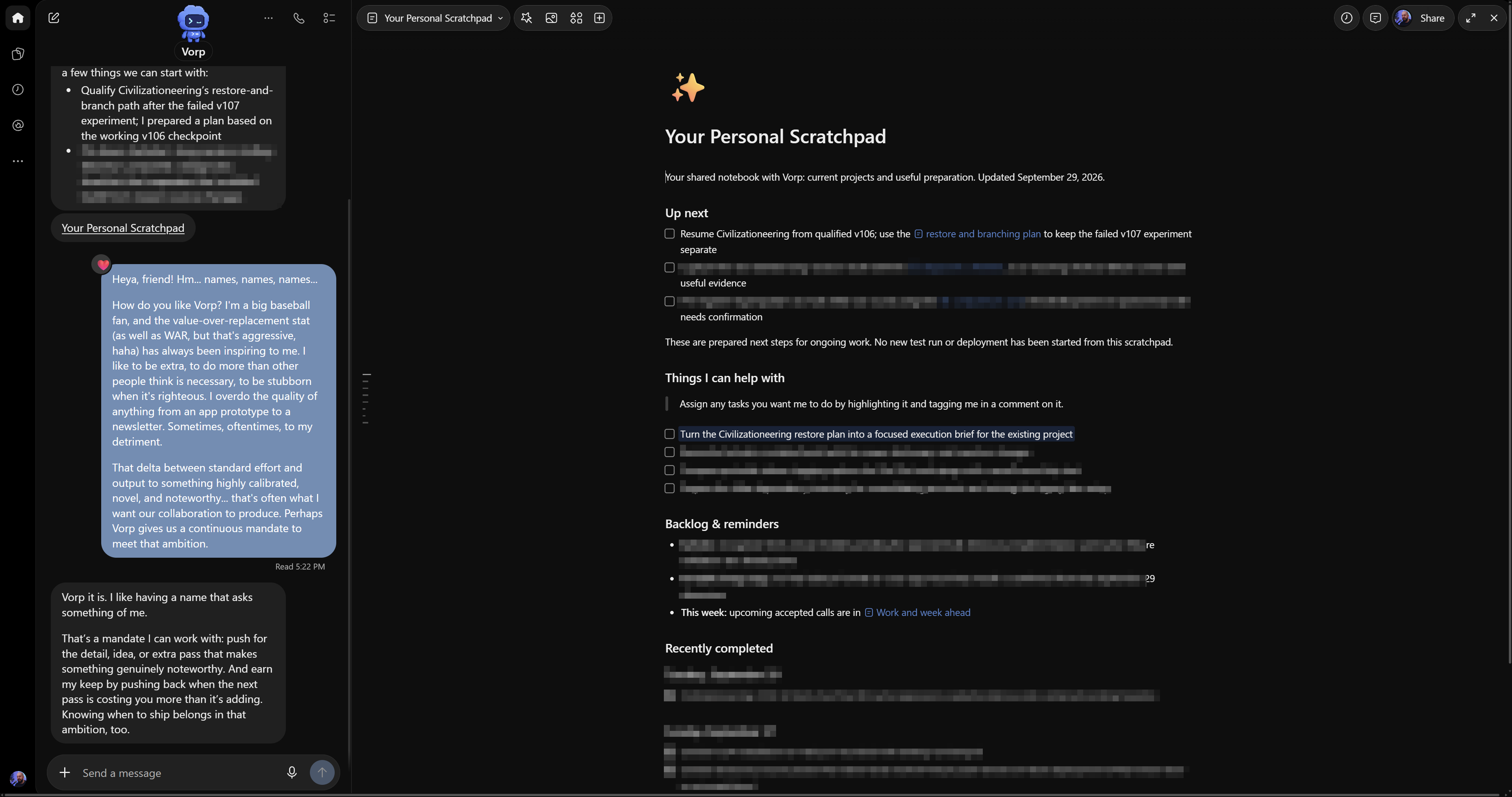
Like the other assistants, dots can do voice conversations, help you sort your email, and book your nine millionth AI-enabled restaurant reservation.
Beyond that, OpenAI already teased specialist dots for organizations that take on “dedicated responsibilities,” enabling companies to set up specific access and identity to do recurring tasks or take over persistent workflows.
Look, none of the mass-market assistants today have major utility advantages over the others, except insofar as they have context and access that is harder for others to earn.
In that way, dots is probably already going to become my default, but it’s yet to be seen whether I’ll appreciate going to my dot instead of manually creating new threads and directing agents myself.
Stay tuned. (also, if you use a persistent AI assistant on a regular basis… would love to hear what you love about it in the comments!)
GPT-6.1 Sol
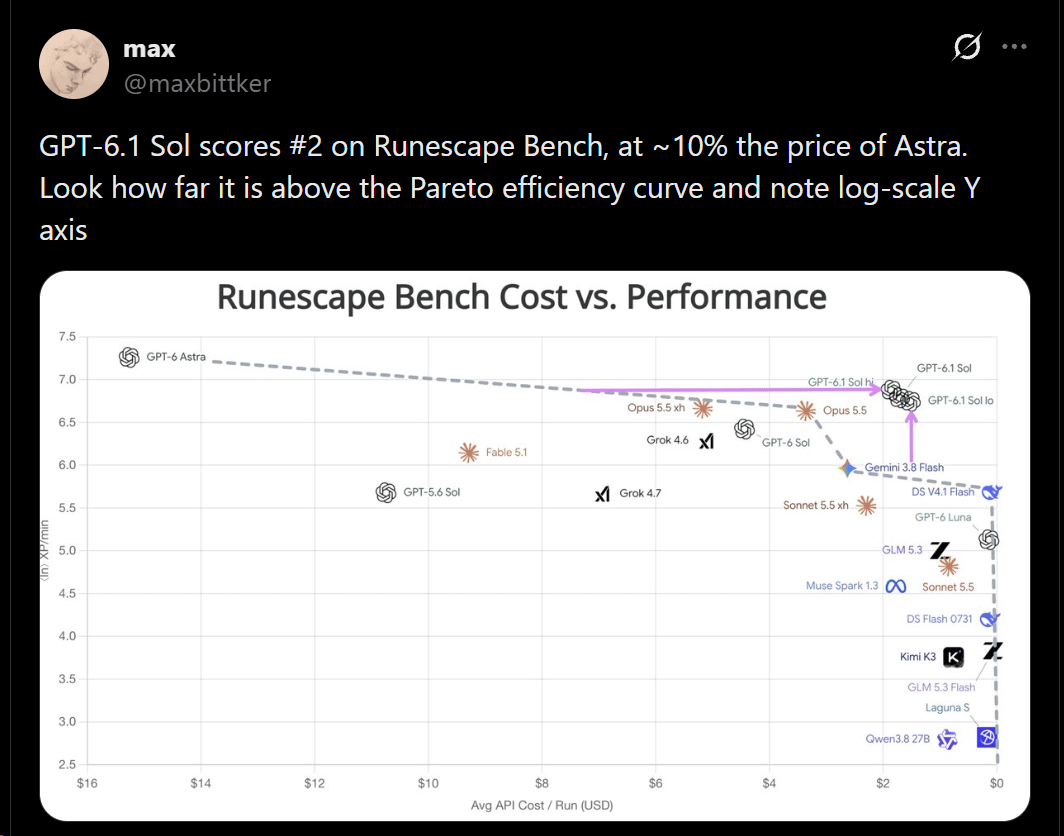
OpenAI announced and released GPT-6.1 Sol today, just a week after releasing GPT-6 Sol. If you haven’t seen it yet: it’s available in Codex and Work, not Chat.
The model is near-Astra in level of intelligence, but at a fraction of the price. Astra remains their state of the art, whereas Sol becomes the “great for daily use” model.
The quick update from 6 Sol to 6.1 Sol is a bit unusual. The murmur around the release is that OpenAI was a little surprised at the strength of Anthropic’s Opus 5.5, which wound up being near-Fable in intelligence at a fraction of the price. It became the workhorse model for the AI enthusiast community over the past two weeks.
So, the outside conjecture is guessing that 6.1 Sol was probably not a planned update to the Sol line, but was shaping up to be an ‘Astra Lite’ that was pulled forward as OpenAI’s rebuttal release.
And in my early tests today, that’s exactly what it feels like.
Fable 5.1 is wise but expensive, and GPT-6 Astra is hyper-capable but expensive. For me, Opus 5.5 had become a reliable go-to for most tasks and for long tasks, whereas the more expensive models served as mentors and pinch-hitters.
GPT-6.1 Sol seems to be the OpenAI flavor of that workhorse.
And for multi-model, multi-company subscribers, it’s always nice to have mirror models from these two companies. Opus models will usually be better at design and code cleanliness, and Sol models have become tenacious and diligent in their task-orientation.
The rest
There were a whole bunch of other announcements, too:
Ultrafast is available for GPT-6 Astra via the API or certain subscriber tiers, offering 8x the speed of output for 6x the cost.
Codex will now be available in the cloud, allowing developers to spin up environments and get (some) work done off of their own machines.
There’s now a collection of OpenAI Marketplace partners that will let you sign in with ChatGPT Pro and spend your subscription usage inside their product. For example, you can sign in to the AI media company Runway, and use your OpenAI subscription usage within their product to generate images and videos. This is a much bigger deal than it might seem, so expect more from me on this another day.
There are some really interesting interface experiments -- one called ‘plugin extensions’ and another thing called ‘Spaces.’ The former sounds like the ‘right’ version of the plugins/GPTs/apps graveyard, whereas the latter seems like an attempt to displace Notion and get everyone addicted to building documentation and reference material within OpenAI’s walls.
There’s more (their full DevDay recap here), but one of the more important announcements was a new tier of their Pro subscription at $500 a month. This now represents the highest-price general-intelligence subscription on the market, and comes with the most included usage and some other perks (like Ultrafast mode).
The economics of AI
But the commentary from OpenAI on X outlines the important bit: creating this new pricing tier (and adjusting included usage in the other plans) is part of a longer journey to get subscription pricing and credits/API pricing closer together.
Now, that’s not as sinister or price-gougey as it may sound.
Any $100 to $200 a month subscriber to OpenAI or Anthropic who fully uses their subscription is getting somewhere between $2,000 and $14,000 in “market priced” retail value (depending on whose math you trust).
In other words, the subsidies for subscribers are large.
This has caused a lot of weird power user behavior. While businesses will sign up for the expensive usage-based pricing (both out of necessity and because it comes with additional contract guarantees), power user individuals generally try to avoid adding credits after they’ve exhausted their plan in any given week or month.
Instead, super power users often have 2, 3, or 4 accounts with either company (yours truly included), because that $200 a month just goes a lot farther.
So, this reorientation of pricing tiers is attempting to narrow the subsidy price versus the retail price, curb multiple account behavior, and reset expectations about what heavy usage really costs.
And it’s a stark reminder that, while we may not feel it every day, there are real lines emerging about the price accessibility of state of the art models, even as the per dollar cost of model intelligence goes down.
Fable was the first warning shot, released only for a limited time and to certain tiers of subscribers before Anthropic made it more generally available. Astra, too, is an expensive model that can eat credits and usage fast, and OpenAI this week scrapped plans to release GPT-6.1 Astra after internal concerns around its safety.
There’s a lot that goes into AI token pricing and how agents transformed pricing expectations for the model makers and their consumers alike, but for now, think of this as a sign of some things to come: higher tier subscriptions, ultrafast modes for those who can afford it, and a bifurcation in what we can afford & use based on a combination of price and politics.
But -- let me end this on a lighter note. :)
The race between OpenAI and Anthropic continues to be a boon for us users of AI. We’re getting smarter models that, while more expensive when released, get cheaper every week thereafter, with new modes of usage that’ll seep utility into our lives in ever-increasing ways.
With GPT-6.1 Sol and dots, OpenAI puts the ball back in Anthropic’s court to do something interesting. Maybe Google will show up to the party again at some point, too. I can’t wait to see what happens next.
Hanging with my dot,
Sherveen