

Hey, y’all -- Sherveen here.
The two big tech titans have released their latest frontier models in the past two days, alongside the typical proclamations of state of the art capabilities and top scoring benchmarks. So, do you have to care about Gemini 4 Argon and Meta Muse Wonder?
Let’s do initial impressions on model intelligence, pricing, and implications.
Diet SOTA
Throughout 2026, the AI ecosystem has wondered whether Google and Meta are still capable of building state-of-the-art models. At the top line, the answer is yes.
For Google, it was getting weirdly quiet: their last “big” model was Gemini 3.1 Pro in February of 2026. It was extremely smart, but quickly fell out of the spotlight because it wasn’t very agentic, eager to take many steps, or plan long-run tasks.
As models and agents got good throughout the year, the Gemini model wasn’t well-suited to ride that wave. Then, they shelved Gemini 3.5 Pro in July/August [Bloomberg] after disappointing internals.
Meta’s path was even more uncertain. For the past few years, their stated goal was to build the best open weight models. But their April 2025 release of Llama 4 was underwhelming and quickly overshadowed by the Chinese open source ecosystem.
Then, Zuckerberg fired and reshuffled leadership [Business Insider], pressing a big ol’ reset button -- without much visible progress until the launch of Muse last month.
With their new models, both teams have proven that they can hang with the frontier. They’re smart, agentic, and significantly better than the latest Grok models coming out of Elon’s compute-rich SpaceXAI.
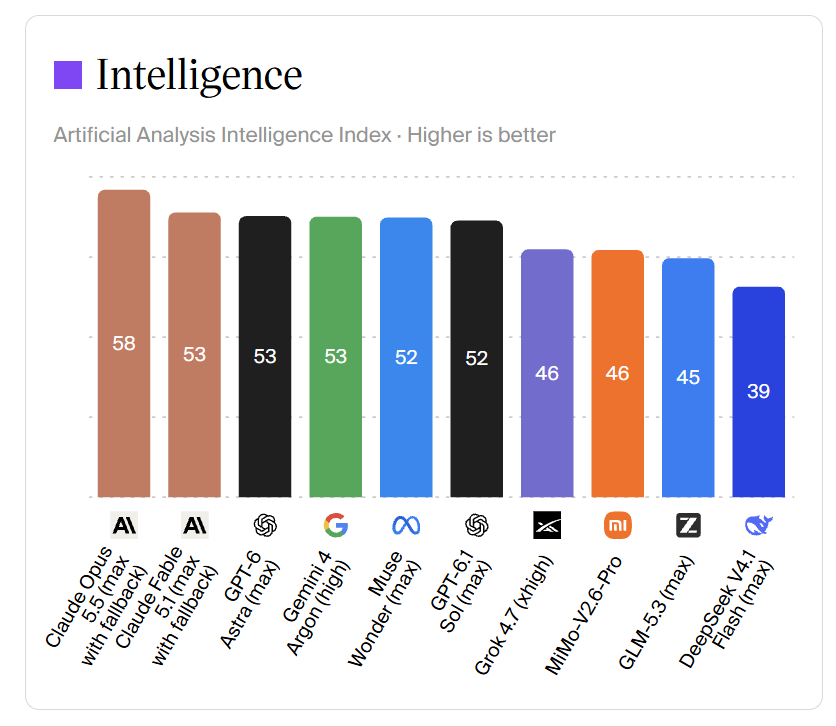
That’s the biggest signal: these teams aren’t so behind, and we shouldn’t count them out. However, in the nuances, we might find that both companies still have a long way to go before actually competing with OpenAI and Anthropic.
High IQ, Low EQ
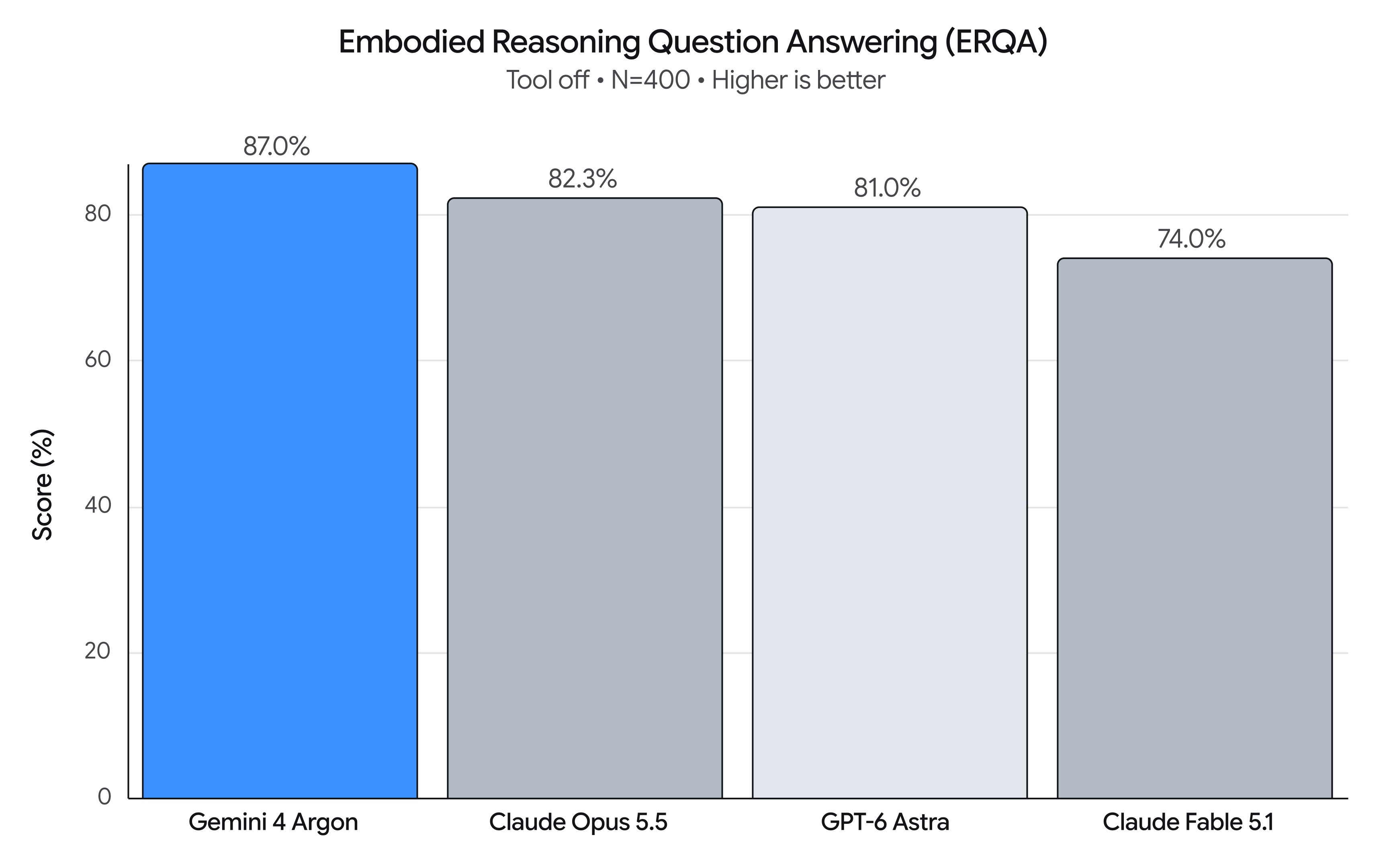
Gemini 4 Argon definitely feels like a Gemini model. Like 3.1 Pro before it, this model is uniquely intelligent. Its “brainpower,” broad reasoning, and world knowledge feel best-in-class.
However, like 3.1 Pro before it, that doesn’t always show itself across multi-step reasoning, long-horizon tasks, and agentic capability.
You can just feel that the model isn’t trained with the same “productive” purpose as Astra, Fable, Sol, or Opus.
Let’s start with the good: when my request needs a model to ‘be smart with what you already know’ rather than ‘do the homework,’ Gemini shines.
I’m impressed by Argon’s ability to explain an economic theory, think about a product challenge, or write in an accessible way.
When talking about medical issues, I can see it think differently (better?) about the facts it’s being presented. It’s almost like it has a more doctor-like theory of mind compared to the “I’m-just-assembling-information” feeling of other models.
That’s great when all the context is already there, in the chat window, in your prompt, or in its knowledge base.
But when doing multi-step tasks in Antigravity (Google’s coding agent), it doesn’t check its work nearly as often as other models, and it seems eager to finish ‘doing’ so it can get to ‘responding.’
That same shallowness shows itself within the Gemini app when the request is more complicated. While ChatGPT and Claude continue to extend how many steps the models can take per turn (& giving them more access to tools and web search), Gemini still feels like it doesn’t let the model do too much before responding.
For example, on research activities that require real-time research, Gemini is much faster than the others, but is usually ~30% incomplete in comparison (I’m vibing this number, but it feels right). And that’s from the search company!
It’s like a student trying to get to 3 pages on their homework assignment by double-spacing their paper.
So, do you have to care about this model release, specifically?
As it stands today, I’d say Gemini has reclaimed its throne as the third best ‘overall’ model. If you’re only subscribing to one AI suite, you should be looking at ChatGPT or Claude. If you subscribe to many and want a model with a very different tone and reasoning style, Gemini might be a good 2nd or 3rd subscription.
Is Meta’s model wonderful?
A quick tangent. I have many problems with Mark Zuckerberg as a political actor. However, I largely think we underestimate his vision as a technologist.
In fact, and I mean this earnestly… he’s right about every technology decision “we” think he’s wrong about. He’s often just too early, too late, or too awkward.
We will be jacked into the Metaverse for a lot of waking hours in the future. If you don’t get it yet, you probably haven’t grasped how hardware improvements combined with AI software will accelerate the quality of VR experiences compared to our real eyes and hands.
We will all be wearing something like the Meta glasses one day. If you think it’s only for weirdos who want to take videos without your permission, then your imagination hasn’t properly considered how ‘persistent,’ AI-driven overlays and audio will become essential to our personal and professional productivity over time.
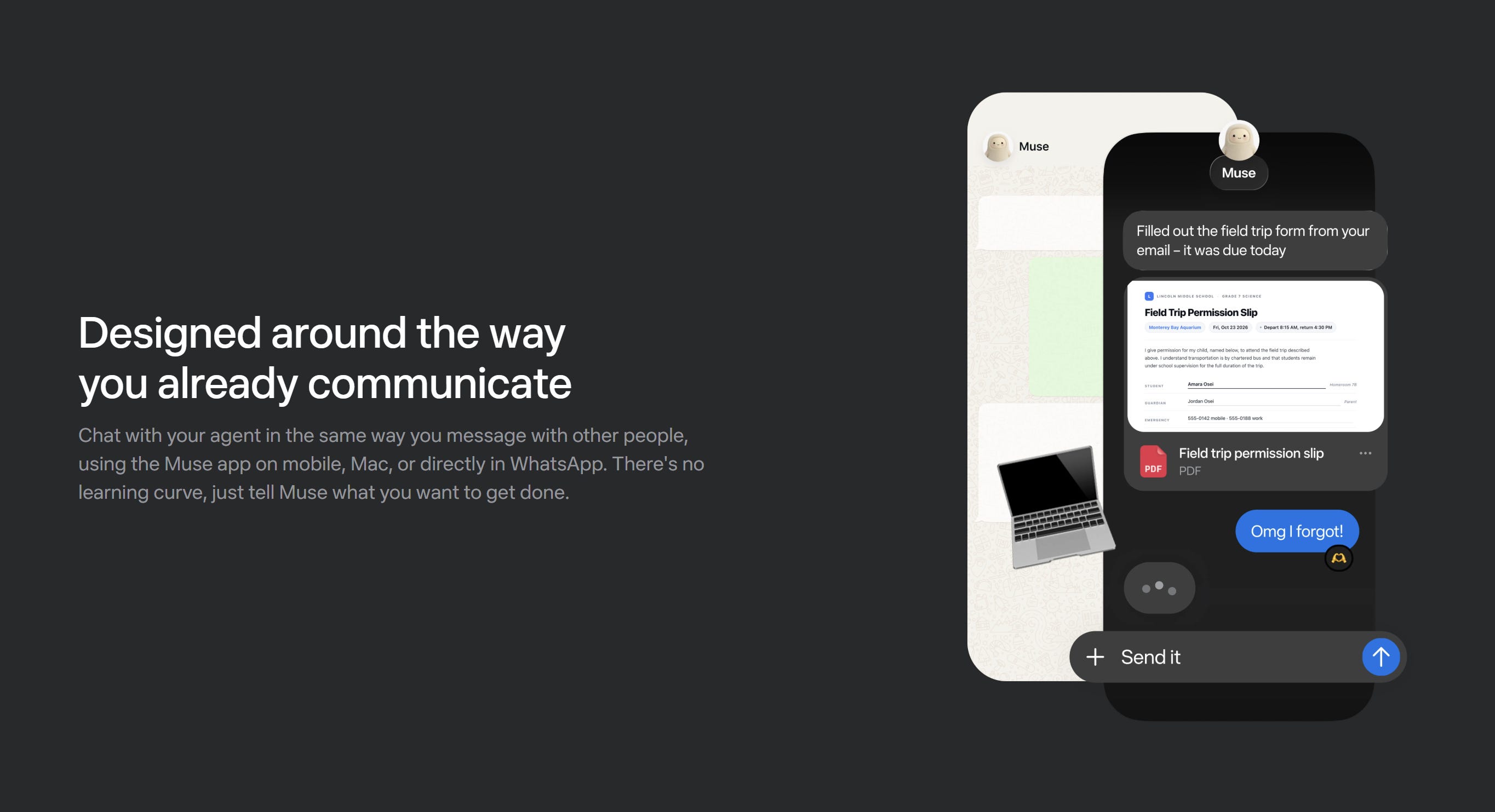
I say all of that because the Muse Wonder release and last month’s AI assistant launch feel like part of a long bet by Zuck. It’s the continuation of a bet on virtual characters, smart glasses, and an increasingly expansive line of hardware.
A lot of disparate Meta bets are coming together to converge on always-on AI companions that hide a lot of the complexity and seep into a lot of their apps.
So, with that very practical view of the future in mind… it’s not a surprise that Wonder Full feels almost like an opposite model when compared to Gemini 4 Argon.
(note: there’s the new Muse Wonder, a pretty mediocre model, and Muse Wonder Full, which is the more frontier, expensive option I’ll be talking about here.)
It’s clearly not as high IQ. I wouldn’t trust it with a medical question the same way I might any of the other frontier models. If the term “IQ” feels a bit amorphous here, think about this as “initial judgement” or “inherent smarts.”
Its explanations are thinner than other models and it’s more likely to miss both obvious methods and clever answers to problems. Once it picks a path, though…
In my early testing with coding tasks, it did more verification and long-run task planning than Gemini. In fact, I’d score it an entire letter grade higher on making sure that it did what it told me it did, which is a key function & value of modern coding agents.
In general, it feels like Meta’s AI team is focused on activities and tasks, and how good the model will be at driving their Muse companion.
But sometimes, this model feels like it’s 3 smaller models in a trench coat. Like, it almost has an “emptier” approach, driven more by its gusto than by its mind.
It’s also weirdly spikey. It can handle some complex coding tasks excellently, but it made mistakes in handling a computer maintenance task for me and has worse taste in web design than Meta’s older Spark models.
So, do you have to care about this model release, specifically?
Again, its strengths and weaknesses are almost the perfect contrast to Google, which has very AGI-pilled teams that believe in hyper intelligent models solving breakthrough problems in math, medicine, and physics. Being useful to us “along the way” is almost a side effect.
Meta feels like they’re trying utility-at-all-costs as the alternate approach. That’s interesting from an intellectual perspective. Otherwise…
If you’re building products and using coding agents, Wonder Full isn’t as good as the rest of the frontier. If you like the Muse assistant already, then you’ll be getting a nice capabilities upgrade by default once they switch that model to the base-level Wonder.
But this model isn’t something you should be reaching for in contexts where you could otherwise reach for the other ‘big 3.’
Wait in line, citizen
As I’ve been warning about, we increasingly live in an AI reality where specific permissions and buying power are driving access to intelligence.
Both of these releases were weird along this theme.
Gemini 4 Argon is only available to Pro and Ultra users in the Gemini app, and only Ultra users in Antigravity (their coding agent). Reminder: Ultra starts at $99 per month.
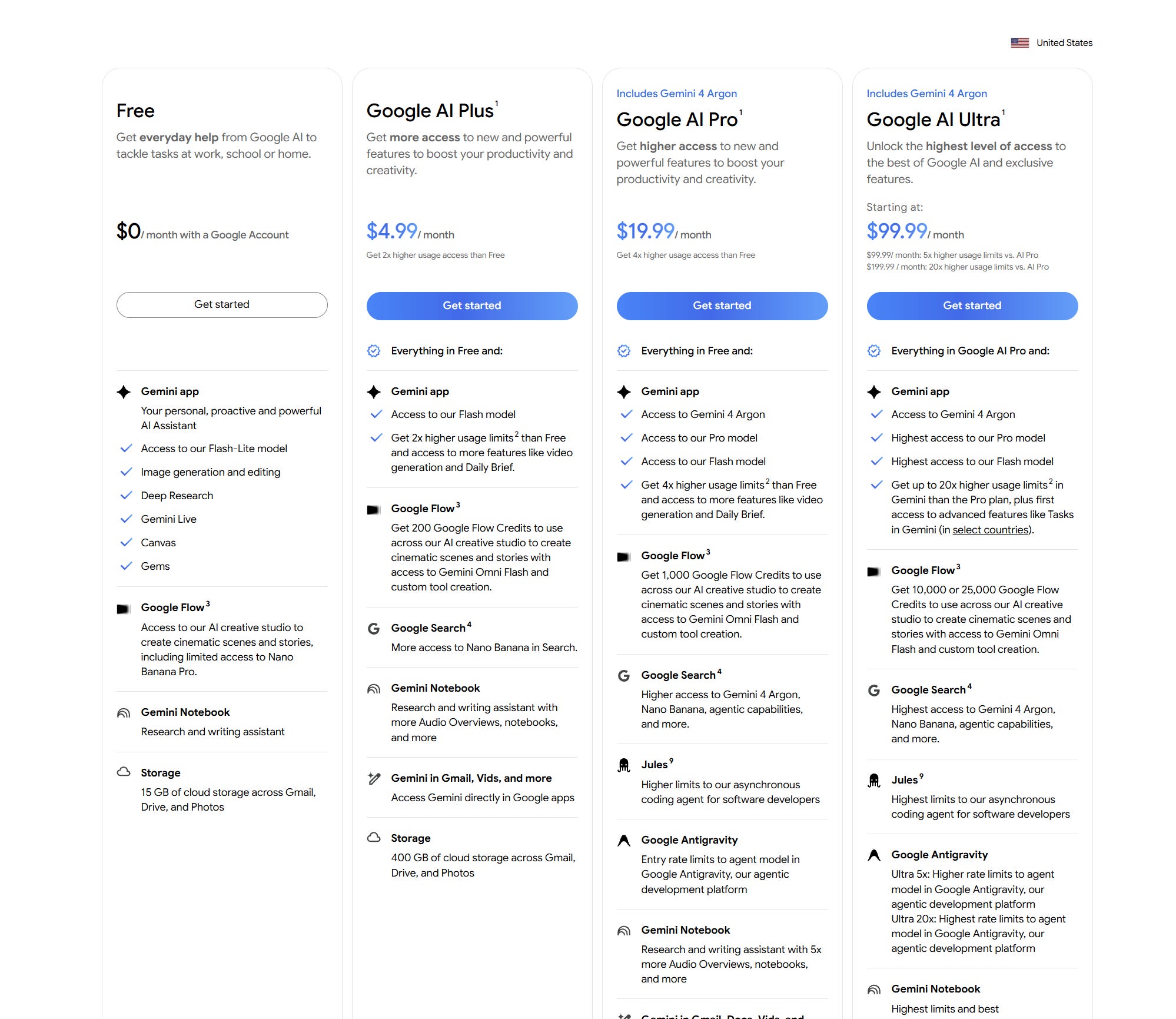
Google swims in money and compute, and yet this continues their trend of reserving features for high priced subscriptions (Ultra used to be $250) with rationed access (Ultra used to give you just 10 ‘Deep Think’ messages a day).
They don’t offer free tiers that are as compelling as OpenAI and Anthropic’s, and their premium tiers are far less value per dollar.
Meta’s Wonder was released only via API and Muse Code to start, so there’s no typical consumer chatbot access yet. Wonder Full, the stronger model (and the only one worth talking about), is only available to Muse Code subscribers.
They say base Wonder will soon power all Muse personal assistant experiences, but first to premium subscribers.
AI changes so much every month that you might not feel the tides changing when it comes to your individual ability to access the smartest models at a ‘reasonable’ price point, but the subtrends are becoming increasingly complex.
Don’t forget that OpenAI recently introduced a $500/month tier. Both OpenAI and Anthropic have reduced usage limits on all of their subscriptions in the past few months, too.
It’s all becoming more segmented: which model, through which interface, with which capabilities, to what limits, when, and how much… it’s an actual matrix.
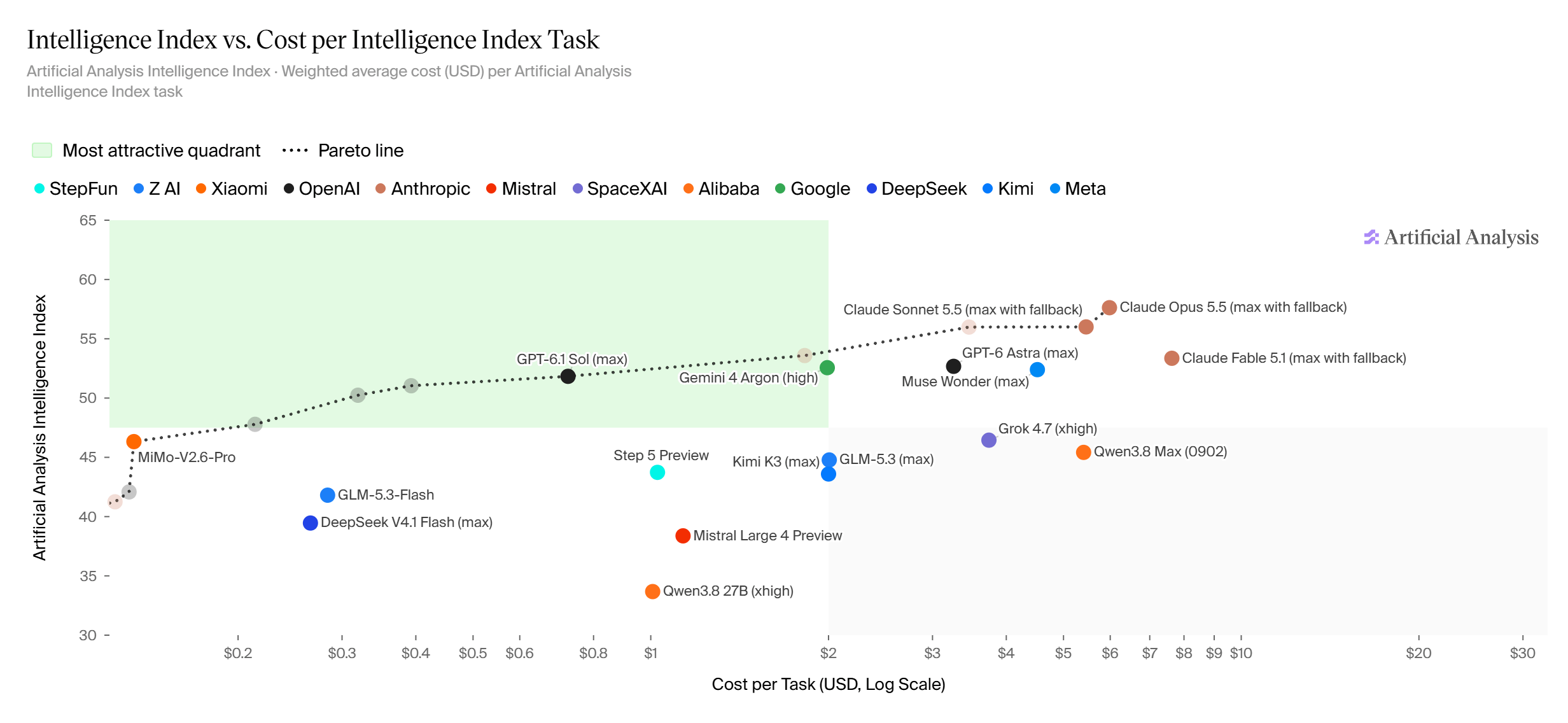
I’m not even suggesting these prices are unreasonable. In fact, OpenAI and Anthropic provide a lot of subsidized usage in their plans.
I am suggesting that there are a lot of subpatterns here worth tracking as a matter of politics and economics. Hopefully, Meta and Google re-entering the race means all frontier model-makers will feel new pricing and access pressure.
Double down on your advantages
With all of the above in mind, it’s also worth noticing that the differences in these models are as much about the companies’ strengths outside of AI, too.
While Google was falling behind on frontier releases this year, they were keeping up with consistent improvements to their Flash series of lighter, cheaper, faster models (currently at Gemini 3.8 Flash).
The theory, in the back of my head: Google has more product ‘surface area’ than any other company in this batch. They can sprinkle AI into search, email, Gsuite, maps, YouTube, Chrome, and their phones.
Those experiences inherently require faster responses, and so a focus on the Flash series benefits those products. But benefitting those products also benefits the R&D toward the bigger models, because that’s where Google gains vast amounts of proprietary training data across personal use cases, professional workflows, etc.
In other words, their team might see a different pathway to the ingredients toward AGI. It’s less about getting the best models into the best coding agents so that the most AI obsessed people use it (OpenAI and Anthropic are on this path).
It’s more about getting really good, really cheap, really fast models everywhere so that they gain metric tons of training data, instead.
So, are these two companies catching up to OpenAI and Anthropic?
As I mentioned, I think these new models can hang out in the frontier, but both are very clearly 3rd and 4th place, rather than competing for 2nd.
It’s hard to count them out, because Google and Meta have what you need:
access to the S-tier quality of research talent
way more data than literally every other company on earth (+ Microsoft)
If OpenAI and Anthropic keep up their current leads… it’ll be because internal model research is becoming recursive enough (ie. the latest models are helping train the latest models) that it’s creating a takeoff loop.
In other words, OpenAI and Anthropic’s agentic breakthroughs in late 2025 allowed them to enter a new ‘map’ in 2026 that the other players can’t even access yet.
I think I believe that, to an extent. I just don’t know if there are more of those types of tier jumps, or if there are opportunities for rubberband-style catch-ups in the current moment before true recursive self-improvement or AGI.
The next thing I’ll really be paying attention to: how fast Meta and Google release the next versions of their biggest, smartest models.
OpenAI and Anthropic are basically on an every-2-month iterative pace right now. We get GPT-5.6 Sol, then we get GPT-6 Astra eight weeks later. We get Fable 5, and then we get Fable 5.1 and Opus 5.5 a few months later.
If Meta and Google can show similar ability to train and productize improvements at a fast pace, that’ll be the signal.
Alright, that’s all for now, folks. Back to the lab.
Have a promptful day,
Sherveen