

Hey, y’all -- Sherveen here.
A few days ago, OpenAI released an update to ChatGPT’s memory system introducing a new implementation centered around dreaming. Yes, that’s right, dreaming!
Anthropic has had a similar-ish system in Claude for a while, though they only call it dreaming publicly in the context of their managed agents platform.
I wanted to take a moment to talk about why these asynchronous paradigms are super interesting and will be an increasingly important trend throughout 2026 and 2027.
What is dreaming?
On a practical basis, dreaming in the context of AI memory management systems is almost exactly what you’d expect: it’s an asynchronous, background process that runs (typically overnight), enabling an agent to look through past conversations and contexts to update a memory summary with key information about you.
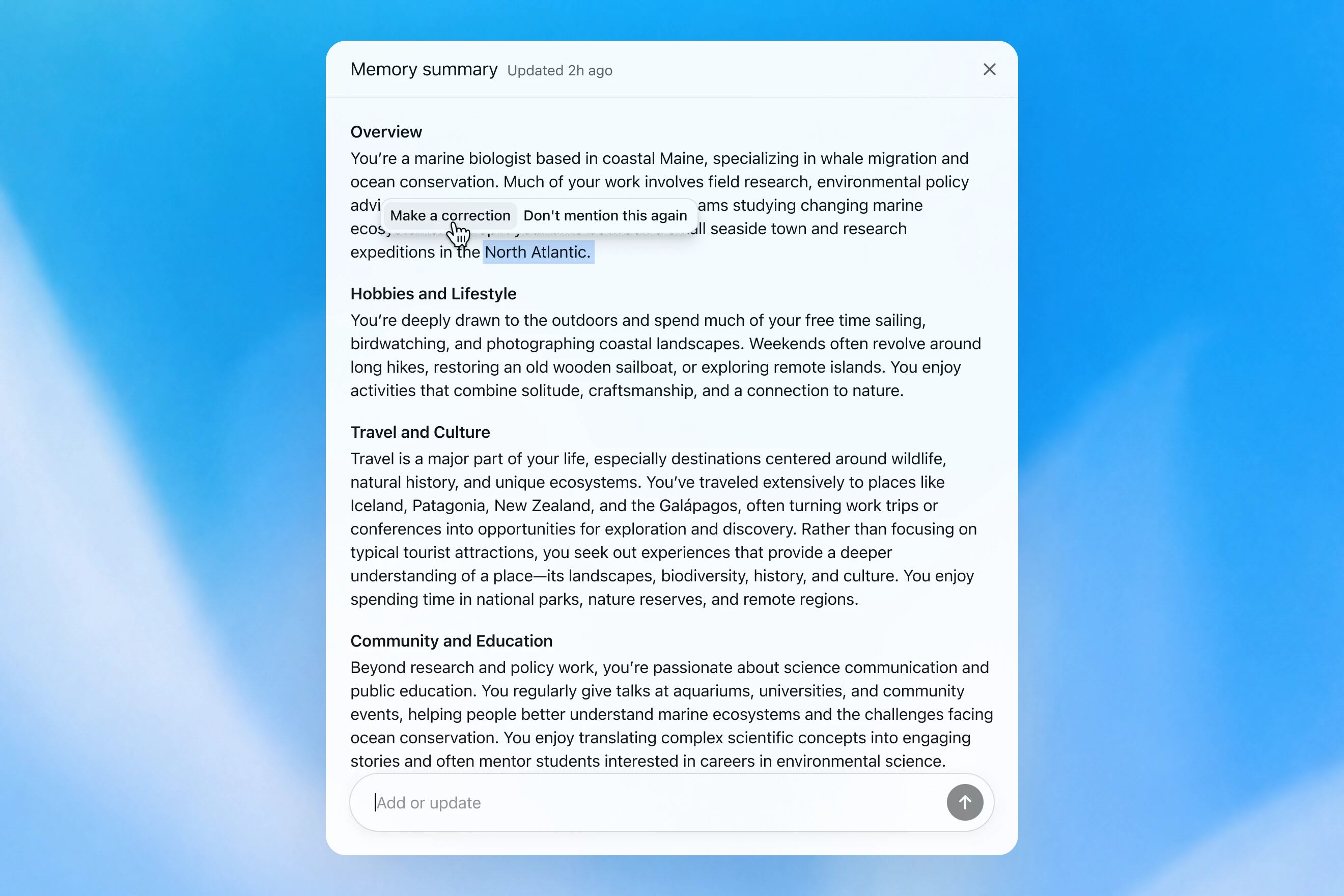
This can be key facts about you, your work, your preferences, etc.
Some of you might wonder -- since ChatGPT, Claude, and Gemini can all look up past conversations already, or had memory systems they could update as they learned key facts about you, why is this async system worthwhile? Why dream?
Async memory management brings a variety of benefits:
A dreaming AI model or agent can take more time since it isn’t trying to respond to you, and can use cheaper compute since it can run at low-activity hours
A dreaming agent can do more “synthesis” work -- looking at multiple chats to reconcile conflicting facts, cleaning up the memory summary of superfluous info, or looking even further back in chat history to validate a fact
The main AI models responding to you in normal chats don’t have to be as distracted by keeping memory updated, which required them to realize a moment might require an update and for them to call tools to make those updates
A dreaming agent can update every night, as opposed to only on demand, establishing a more iterative and constant approach to updates overall
The question of memory becomes less “I should remember this before I forget,” and more “should I forget this” and “is this important,” since this is happening outside the context of an individual chat
Async memory management across multiple apps (say, ChatGPT on the web and Codex on your computer) could share certain but not all memories, bringing the benefits of composability and relevance to the table
And the results…
Okay, so it’s a cool process with a cute name -- what’s the bottom line impact?
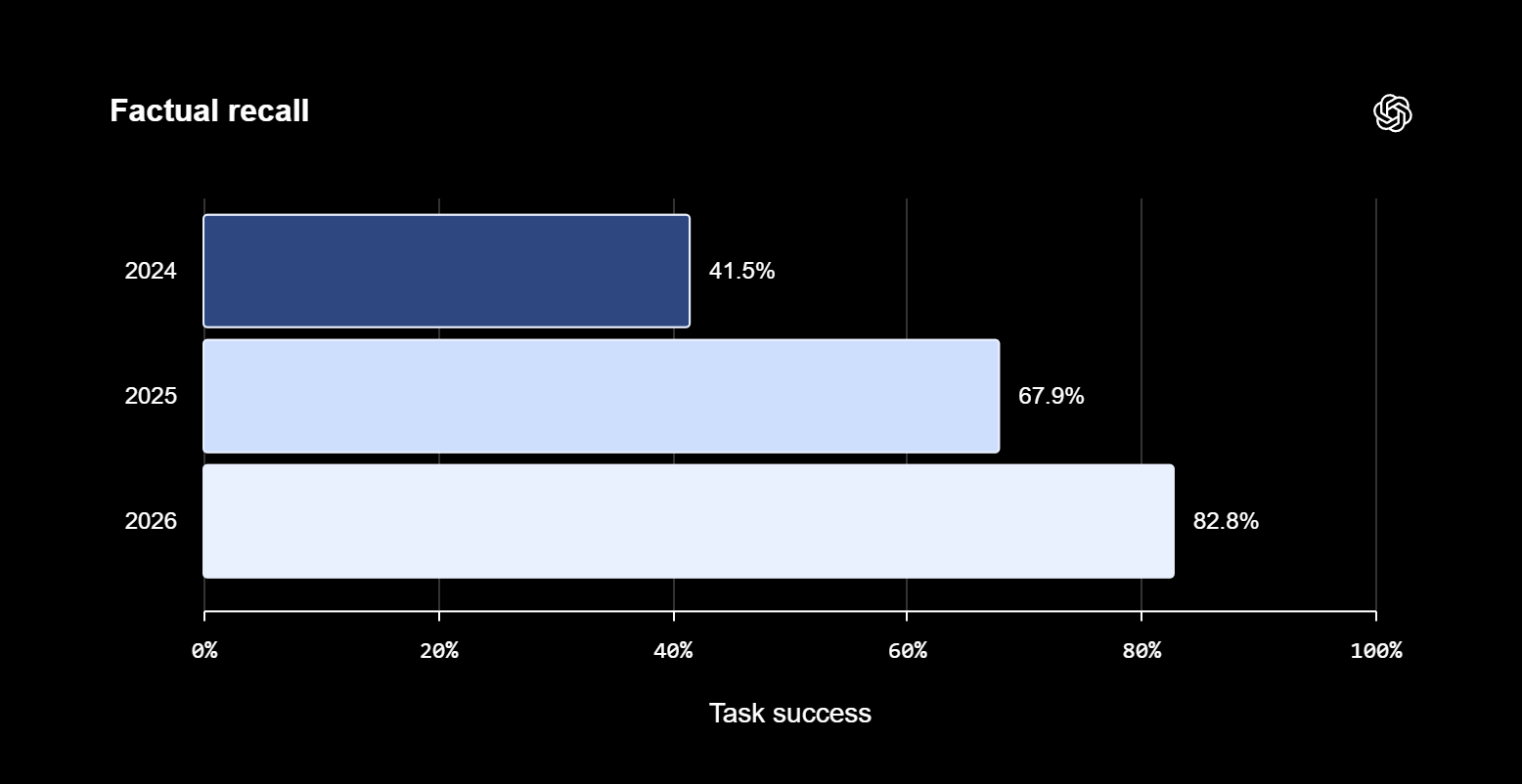
OpenAI first started testing this new system 2025. In internal benchmarks, OpenAI found their new memory system achieves an 82.8% factual recall success rate here in 2026, compared to 41.5% on the same task set in 2024.
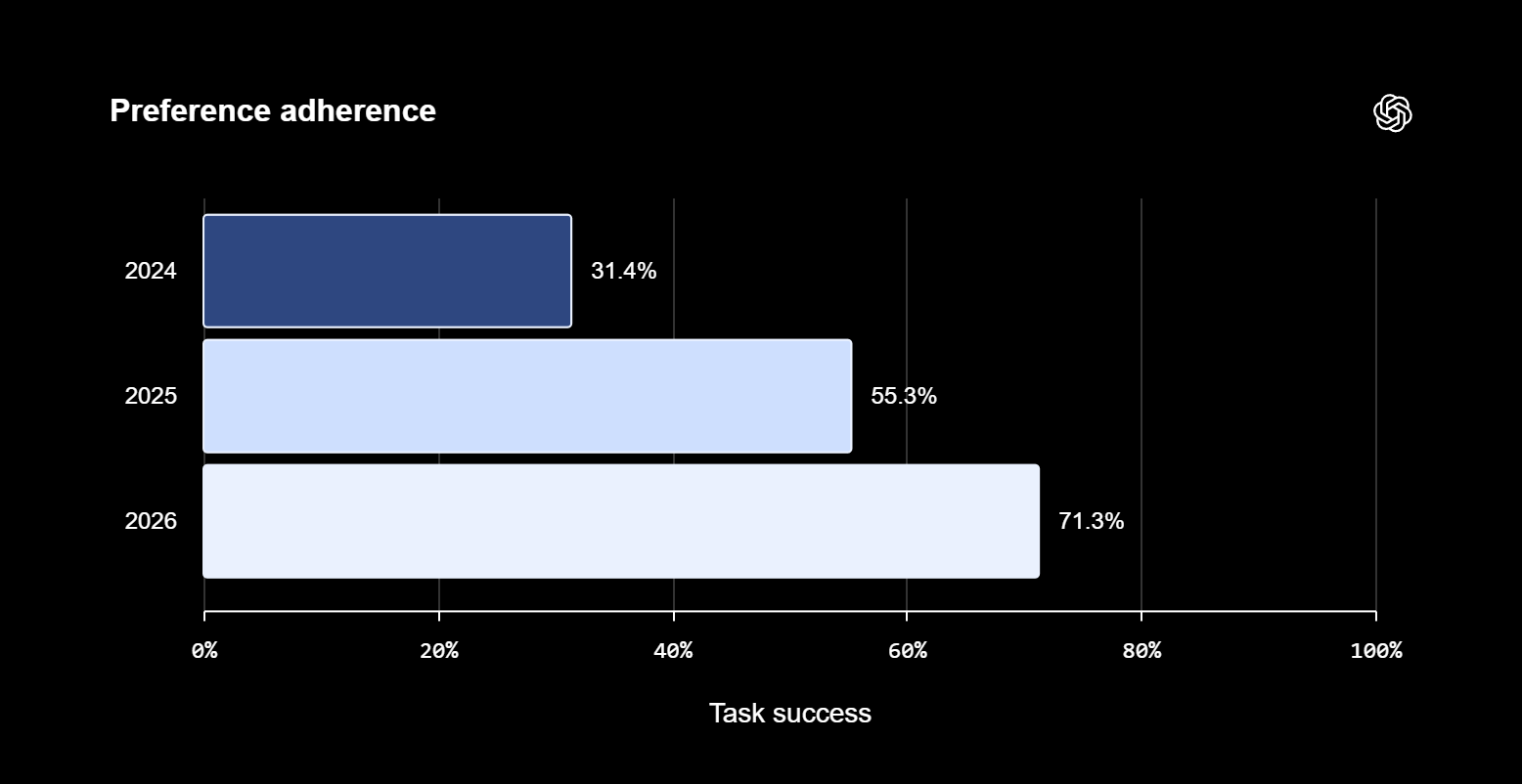
In another benchmark around “preference adherence” (ex. giving the user vegetarian-friendly dining options when a vegetarian user asks for meal prep suggestions), ChatGPT has gone from a 31.4% task success rate in 2024 to 71.3% in 2026.
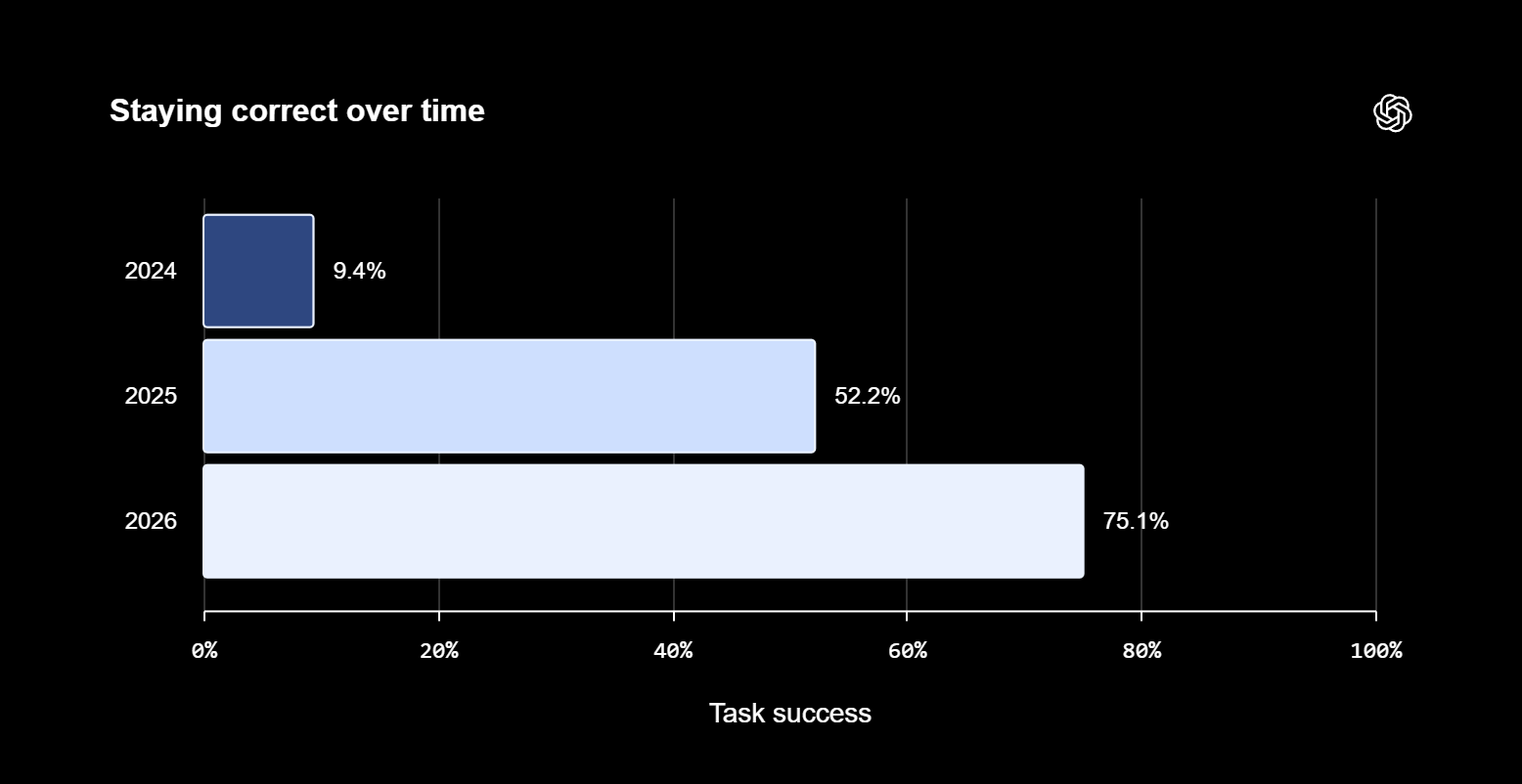
And, perhaps most importantly, in a benchmark around memory drift over time, this new system massively outperforms past memory management in ChatGPT:
Asynchronous is the opportunity.
I’m excited by all sorts of potential implementations of dream-like processes in AI tools. When products or agents can run useful workflows in the background or asynchronously, what we’re really suggesting is that they can focus on a specific activity rather than doing it distractedly while in a key workflow with the user.
ChatGPT’s Pulse feature comes from the same paradigm -- overnight, Pulse curates a set of topics based on your recent conversations, then does research runs on those topics using more efficient compute and deeper web search workflows, and returns them to you as a set of chats to browse through every morning.
There are so many products and workflows that can benefit from the dream architecture and paradigm. The benefits will come not just in terms of cool features and improved outputs + outcomes, but the improved cost and economics because of the offloading of activity to off-hours in the age of increasing demand for on-hours AI.
In fact, at the bottom of the blog post about this feature, OpenAI even acknowledges that compute efficiency is the only reason that it will release this feature to its Free tier of users in coming weeks.
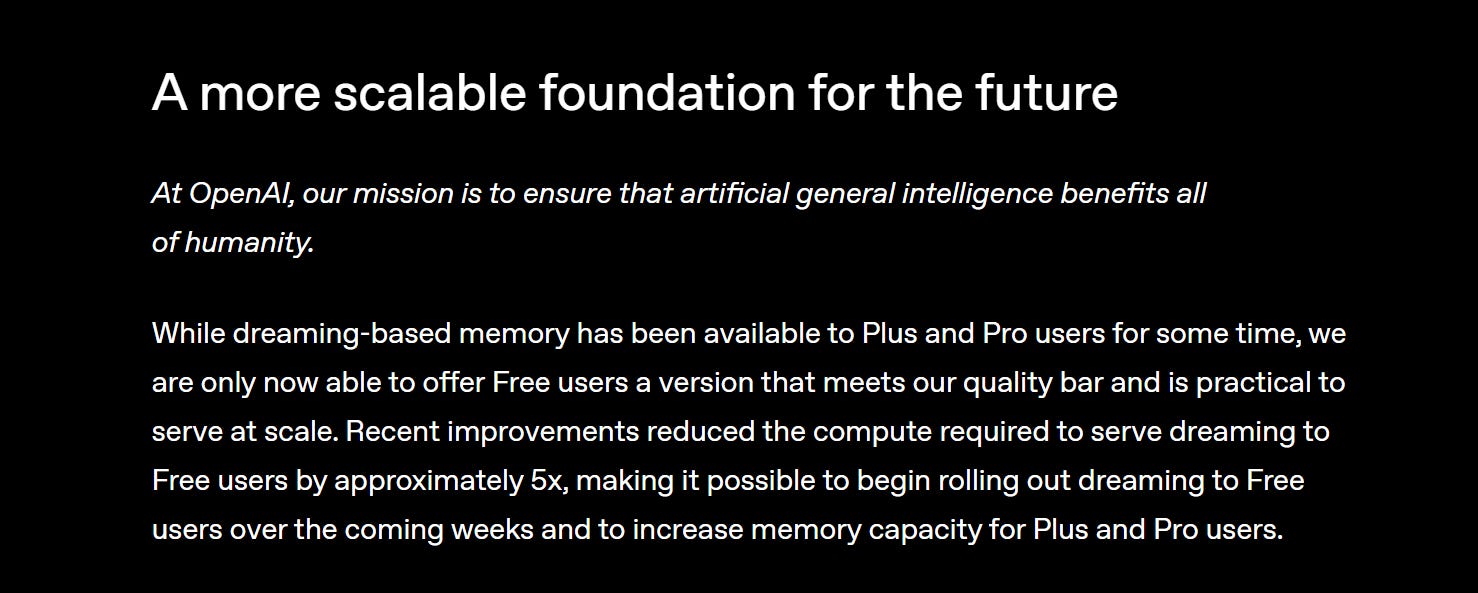
Something worth paying attention to!
If you’re a ChatGPT Plus or Pro subscriber, go check out the new memory summary in your personalization settings to see what ChatGPT dreamed up about you. :)
Alright, y’all -- that’s all for now! See you next time.
Dream efficiently,
Sherveen
Great article Sherveen! Thanks for the analysis of how the background process works